
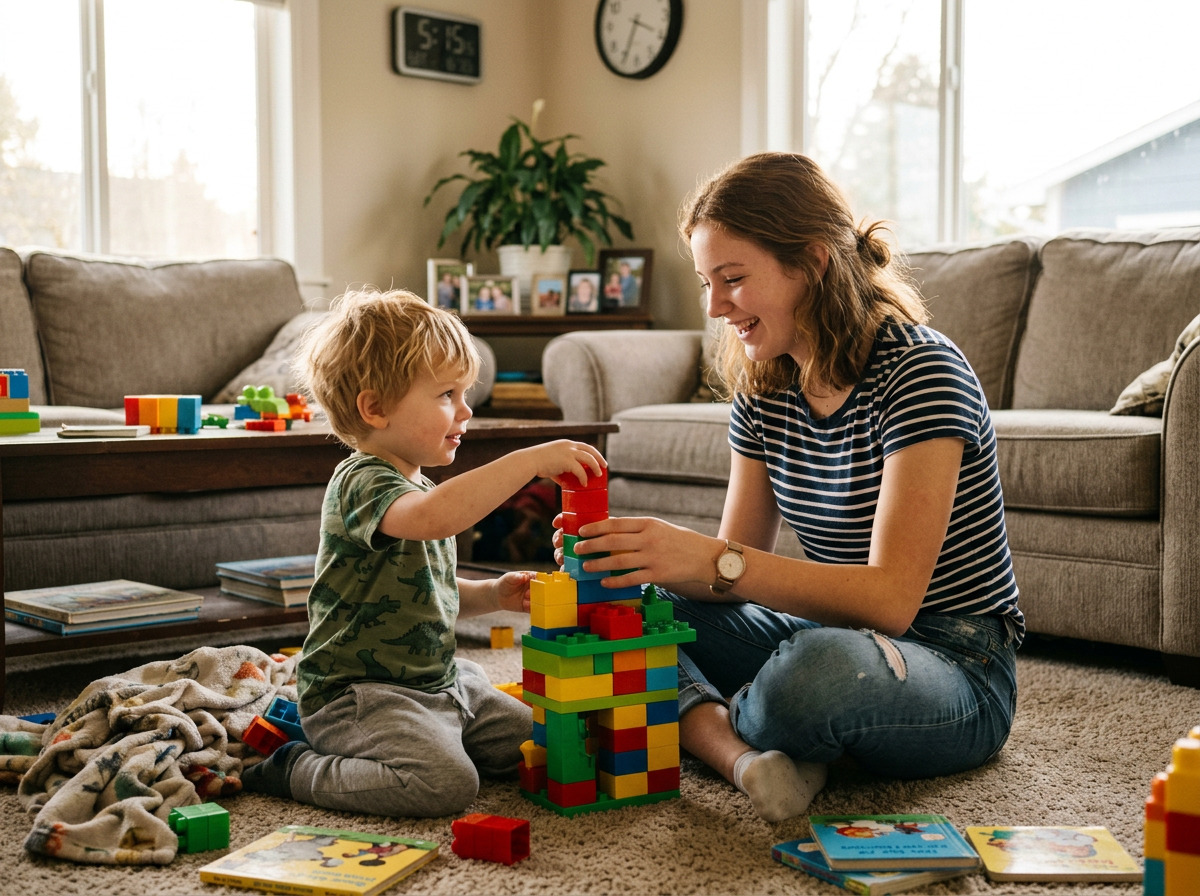
You’ve found someone you trust, the dates are booked, and you’re still lying awake wondering how your child will actually cope. That mix of relief and guilt before a first babysitter is completely normal, and it usually has far more to do with how the introduction is handled than with the babysitter themselves.
The good news is that a first babysitter goes more smoothly with a little groundwork than most parents expect. This guide covers the emotional side, the practical checklist, and exactly how to hand over without making the goodbye harder than it needs to be. If you haven’t hired anyone yet, our complete guide to hiring a babysitter in Ireland is the right place to start first.
A little preparation turns a first babysitter into a friend, not a stranger
Children generally aren’t worried about the babysitter as a person. They’re worried about the change itself, a new face, a different routine, you leaving. Once you separate those two things, preparing for a first babysitter stops being about vetting a stranger and starts being about managing a transition your child can actually get used to.
That reframe also takes pressure off you. You’re not throwing your child in at the deep end. You’re introducing a change gradually, the same way you would with any other new routine.
Separation anxiety is normal, and it follows a predictable pattern
Separation anxiety typically starts between 7 and 12 months old and can continue well past age 3, according to the HSE’s guidance on separation anxiety. It’s a sign of a healthy bond, not a problem to fix, and it doesn’t mean your child can’t cope with a first babysitter.
The HSE’s practical approach works well applied directly to babysitting:
- Start small. Begin with very short separations at home, even just a minute or two, and build up gradually with someone your child already knows a little
- Visit beforehand. If your babysitter is new, have them come round once or twice before the real night out so your child associates them with a familiar, low-stakes moment
- Leave something comforting. A piece of your clothing or a favourite toy can help bridge the gap while you’re gone
- Give them something to look forward to. A simple, concrete plan for when you’re back works better than vague reassurance
A short trial session beats a surprise first night
Whatever you do, don’t make the actual night out your child’s first-ever exposure to the babysitter. A paid trial session, even 30 to 60 minutes while you’re still home or just popping out locally, lets your child get used to the babysitter with you nearby as a safety net.
It costs a little extra, but it’s worth budgeting for. Our guide to babysitting costs in Ireland covers typical rates, so you can factor a short trial session into what you’re already planning to spend on the real booking.
What to prepare before your first babysitter arrives
Once the emotional groundwork is in place, the practical side is mostly about information, not equipment.
Emergency information and routines
Write everything down rather than relying on memory in the moment. At minimum, leave:
- Your phone number, plus one backup contact who’s nearby
- Any allergies or medical needs, including where to find any medication
- Bedtime, meal, and screen-time routines, in the order your child expects them
- What time you expect to be back, and where you’ll actually be
This kind of babysitter checklist, covering emergency contacts, allergies, and routines, mirrors what the American Academy of Pediatrics recommends parents leave for any sitter, regardless of how experienced the babysitter is.
A comfort item or two
Pack a favourite toy, a blanket, or a book you know your child likes. It’s a small thing, but it gives your child something familiar to anchor to when everything else about the evening is new.
How you say goodbye matters more than you’d think
Keep the goodbye warm, short, and confident. Lingering, or looking anxious yourself, tends to signal to your child that there’s something to worry about, even when there isn’t. A quick, loving goodbye, followed by you actually leaving, settles things faster than a long drawn-out one ever does.
These babysitting tips apply just as much to a second or third babysitter as a first, but they matter most the very first time, when neither you nor your child has a track record to fall back on. Keep at it for a session or two and it stops being a big production altogether.
Finding a babysitter your child will actually warm to
None of this preparation matters much if the babysitter themselves isn’t a good fit. You can find a Garda-vetted babysitter through TrustedCarers and look for someone with genuine experience at the age and stage your child is at right now, not just general childcare experience.
If you’re still deciding who to book, our hiring guide covers the interview questions worth asking, and our babysitting articles hub has more practical tips once you’ve found the right person.
Key takeaways
– Separation anxiety is normal and typically runs from around 7 months to past age 3. It reflects a healthy bond, not a problem
– Build up to a first babysitter gradually: short separations at home first, then a visit or two, then a short trial session
– Write down emergency contacts, allergies, and routines rather than relying on memory in the moment
– Pack a comfort item your child already knows
– Keep the goodbye warm, short, and confident. Lingering tends to make things harder, not easier
Your child’s first babysitter doesn’t need to be a perfect experience. It just needs to be a manageable one, and a little preparation gets you most of the way there.
FAQ
Q: How do I prepare a toddler for a babysitter?
A: Start with short separations at home, build up gradually, and have the babysitter visit once beforehand if you can. A comfort item and a warm, brief goodbye help more than a long explanation does.
Q: What are the red flags for babysitters?
A: Vague answers about experience, reluctance to provide references, or discomfort with basic safety questions like allergies and emergency contacts are all worth taking seriously. A good babysitter welcomes those questions rather than being defensive about them.
Q: What are 5 qualities of a good babysitter?
A: Patience, genuine warmth with children, clear communication with parents, reliability, and calm under pressure during the unexpected. Experience with your child’s specific age group matters more than years of babysitting generally.
Q: Is 12 too old for a babysitter?
A: Not at all. Many children still benefit from a babysitter at 12, especially for evenings out or overnight care, even if daytime independence has grown. It depends far more on your individual child than a fixed age.
Q: What is the hardest age to babysit?
A: Toddlers between roughly 1 and 3 are often considered the most demanding, since separation anxiety peaks in that range and they can’t yet fully communicate what they need. That’s exactly why the preparation steps above matter most at that age.

Leave a Reply